
Three Seconds
The Roberto Burioni deepfake and the question YouTube still can't answer


Subscribe to both of us.
Nothing is paywalled, but our effort is real. If you’re able, please consider pay subbing.
I hadn’t planned to write about AI, copyright, YouTube, or deepfakes. But reality offered something impossible to ignore. As James and I worked on this essay, we realized that, at its core, it is a story about what we choose to protect. So it became a Marble & Ember story.
🇺🇸 English version below / 🇮🇹 Versione italiana in fondo al testo
🇺🇸 English
Ladies and gentlemen, gather close. I have a story for you, and like good stories, it begins with something too small to notice.
Three seconds: that’s all it takes.
Slip three seconds of a copyrighted song under a birthday video for your third cousin, and in a windowless data center that I like to imagine dotted with blinking red lights, a piece of software wakes up and does its job. Clip flagged, audio muted, fade to black. Advertising revenue redirected to a right holder who will never know your name and doesn’t need to. The whole performance takes less time than it took you to read this sentence. I might even add a number: according to a TorrentFreak analysis, YouTube’s Content ID system processed roughly 2.5 billion copyright claims in 2025 alone, with more than 99 percent of them resolved without a human eye ever glancing at the footage. Since the system began, it has funneled over $12 billion to right holders. It is, in its own cold way, a magnificent piece of engineering.
Notice what the machine is actually built to do. Out of all those billions of claims, rights holders chose to monetize rather than remove more than nine in ten of them, a figure YouTube’s own Copyright Transparency Report states plainly. Content ID isn’t really in the business of protecting a song from being stolen. It’s in the business of collecting rent. The infringement is allowed to continue, it just has to pay. Keep that in your pocket. We’ll need it again.
Now consider a different kind of theft.
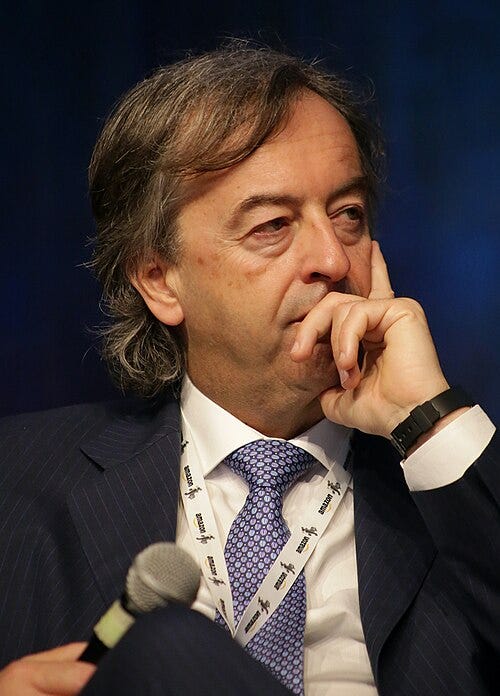
On June 12, 2026, a YouTube channel calling itself “Il Medico Risponde,” traced to an account registered in Brazil, began publishing videos of a face. A familiar one. The voice was familiar too, and so was the manner. It was Roberto Burioni, the Italian physician and professor of Microbiology and Virology at Vita-Salute San Raffaele University in Milan who has spent a career warning people not to trust strangers bearing easy answers.
Except it wasn’t him.
It was a synthetic Burioni, dispensing advice he never gave: avoid this medication, elderly viewers; here is the miracle fruit that repairs cataracts, my followers. The very species of foolishness the real Burioni spends his time dismantling. In three weeks, the channel gathered over 164,000 views and more than 1,500 subscribers, according to Fanpage.it.
The sheer theater of it.
It was not Burioni’s first encounter with his own ghost. A year earlier, in May of 2025, a similar spirit surfaced on TikTok—an account Secolo d’Italia reported had over 26,000 followers, hawking supplements in his voice across a dozen recycled clips. Burioni did what every reasonable man does when faced with an unreasonable machine: he complained. He warned people using his Facebook account. He told Adnkronos Salute the internet had become the “far west” - the wild west. Nor was his case isolated: Nicola Bernardi, president of Federprivacy, had already flagged a nearly identical channel cloning the voice of the psychiatrist Paolo Crepet. Thirteen months later, when the Brazilian channel appeared, Burioni already knew the routine: he filed formal reports with YouTube, more than once. He posted warnings on X. Despite his reports the platform hadn’t removed the channel. Since the account was registered abroad, a police complaint through Italy’s Polizia Postale faced the usual jurisdictional wall. By the time law enforcement corners a platform like YouTube, Bernardi observed, the account has already vanished behind a foreign registration, and the old-fashioned complaint becomes, in his words, useless. The faster route ran through Italy’s data protection authority, the Garante per la Privacy, since a face and a voice can be classified as biometric data. Meaning? A complaint under the GDPR might move faster than YouTube’s own moderation queue.
I have to interrupt myself here, because the excuse doesn’t survive its own logic. Content ID does not care where an uploader lives. It matches a fingerprint and acts automatically, the instant the upload lands, whether the account is registered in São Paulo or Milan. If YouTube can silence a Brazilian account humming three seconds of a Rihanna song without knowing its owner’s name, it can flag a face the same way. Jurisdiction is the police’s alibi, not the platform’s.
Burioni did everything the playbook says to do, yet for days afterwards the fake video stayed up anyway, accumulating views and subscribers, being indexed by search engines and recommended to people who had never heard of “Il Medico Risponde” but had certainly heard of him and had no reason to doubt what they were seeing.
Now, allow me to disappoint you a little.
This isn’t really about Roberto Burioni. He matters, and I hope he’ll forgive the phrase, because there is nothing special about him. He is not the first public figure to be cloned and he will not be the last. What makes his case worth attention is its unapologetic ordinariness.
Anyone watching ten seconds of that footage with a stiff figure speaking with an unsettling cadence in a studio backdrop too bright, might sense, in their bones, that something was off. There was even a small label indicating that the content had been generated with AI, one that was easy to overlook. But among the comments beneath one of those videos sits a retired physician, real name, real profile, congratulating the fake Burioni and pitching him ideas for future episodes. This is not a careless person, it’s a trained medical professional, the kind we’d expect to catch a fraud like this, and the fraud caught him instead. It’s one comment, not a study, but it’s worth considering it: for twenty years the internet literacy advice was to look closer, check the source and trust your education. The fraud caught the retired physician anyway. If expertise and attention can’t reliably catch a synthetic face anymore, the old advice has stopped being sufficient and the burden has to move somewhere. Right now, it isn’t moving anywhere at all.
Still, a machine built to sort through billions of uploads daily, that can catch three seconds of unlicensed music with the ruthlessness of a shark, could not, or would not, catch this. You can steal a person’s face, their voice, their name, years of hard-won credibility, and the answer is often a flat, maddening please fill out a form.
This is not an isolated grievance. CNN’s chief medical correspondent, Dr. Sanjay Gupta, has had to stand in front of a camera and explain that the grinning man selling honey cures for Alzheimer’s is not him. The New York Times found other doctors caught in the same net. The pattern recurs often enough that medical professionals have begun wondering whether teaching the public anything at all is now an invitation to be cloned.
Now, a fair objection: I’ve handed you a parade of anecdotes and called it a pattern, while for copyright I buried you in a mountain of data. Where, you might ask, is my denominator? Guilty, mostly. Certainly there are cases where a stolen identity came down within the hour, I won’t pretend otherwise. But notice what this reveals: YouTube counts its copyright claims down to the last digit, 2,502,941,368 of them in 2025 to be exact, because copyright spent decades teaching platforms to keep score. No major platform publishes a transparency report on how long it takes to remove a stolen face. That’s not a gap in the record. It’s the record. What a company doesn’t bother measuring is usually what it has decided doesn’t need managing.
It’s worth being precise about why different categories of harm–medical misinformation, copyright infringement, and non-consensual intimate deepfakes–belong to the same analysis. All three depend on the same underlying capability, matching content against a claimed identity at scale, and all three run through the same platforms. What predicts how fast a platform responds is its own legal exposure, not the harm to the victim. Copyright carries statutory damages written into law with exquisite precision, and rights holders have legal departments that rival small armies. Non-consensual intimate imagery, since May 2026, carries a federal forty-eight-hour takedown deadline and civil penalties of up to $53,088 per violation under the FTC’s enforcement of the TAKE IT DOWN Act. Both categories move fast because both carry a price tag attached to inaction. Roberto Burioni’s clone triggers neither. It’s not obscene, it’s just dishonest, and dishonesty, evidently, is not yet expensive enough to earn its own stopwatch.
This is not a conspiracy. A conspiracy implies intention, and intention is too generous a word for something duller and considerably more damning: optimization. A large technological system measures only what it has decided to measure and improves only that. Give it a KPI that reads “avoid a copyright lawsuit,” and copyright detection becomes nearly flawless. Give it no KPI labeled “prevent a person from being cloned”, and that problem does not exist. It’s math. And math, unlike villains, never has to look you in the eye.
Which brings us to Likeness Detection, YouTube’s answer, tested since October 2025 and extended by May 2026 to every creator over eighteen. It’s described as working “much like Content ID”, except it hunts for faces. Here is where the ‘just math’ story gets complicated: a creator has to enroll first, submitting a government ID and a reference video, and even after a match is found nothing is removed automatically. The creator still has to file the removal request by hand, and the company’s blog itself admits detection does not guarantee removal. Content judged to be parody or satire may be allowed to stand regardless. Now, a fair minded critic would stop me right here. Scanning every uploaded face against a reference file without asking first isn’t a small choice, it’s the kind of unconsented biometric processing that has already produced some of the largest privacy settlements in American history, and that GDPR treats as data requiring explicit permission. Grant that entirely, it explains why YouTube can’t fingerprint a stranger’s face without asking, but not why a creator who has already asked following the procedure still has to file a request by hand once a match is made. And here’s the fine print: the system currently checks faces only, voice detection is planned and not live yet. Burioni’s impostor spoke in his voice too, the part of the theft this tool still can’t see, even for a creator who has enrolled. Content ID defends you by default. Likeness Detection requires you to first prove you’re worth defending.
For twenty years the internet’s great commandment was simple: don’t believe everything you see online. Good advice, as far as it went. It no longer goes far enough. The problem, today, is not that someone might be lying to you. It’s that someone can become you, in front of an audience of hundreds of thousands, saying things you never said, convincing you to buy the miracle fruit that repairs cataracts, while the institution hosting it files the whole affair under routine administrative matter. Forgery once took months of effort and a skilled hand. Now it takes a laptop and a free afternoon.
I do not think artificial intelligence created a new problem so much as it made an old one impossible to ignore. Artificial intelligence has learned to imitate us convincingly. But parrots imitate too, and nobody loses sleep over parrots. The real point here isn’t just the imitation, but the choice about what deserves automatic protection and what can wait for someone to fill out a form.
Three seconds of a song are enough to wake a machine. For a stolen face you’re the one who has to wake it. Nobody reasonable wants a platform scanning every face online without asking first, that would just trade one violation for another and the objection is a fair one. But for the person who already sent the ID, sat for the verification video, the excuse runs out. The machinery to protect them the instant a match appears already exists, it’s largely the same that protects a jingle. Nobody has yet been asked to turn it on for a face. Technology did not invent that hierarchy: the algorithm did exactly what it was built to do.
Priorities rule. Even the wrong ones.
🇮🇹 Italiano
Signore e signori, avvicinatevi. Ho una storia da raccontarvi, e come tutte le migliori storie comincia con qualcosa di talmente piccolo da passare inosservato.
Tre secondi: tanto basta.
Infilate tre secondi di una canzone protetta da copyright sotto il video di compleanno del vostro cugino di terzo grado e, da qualche parte in un data center che mi piace immaginare privo di finestre e costellato da lucine rosse intermittenti, un software si sveglia e fa il suo lavoro. Clip segnalata, audio silenziato, fade to black. I ricavi vengono reindirizzati al titolare dei diritti, che non saprà mai chi sei e non ne ha bisogno. L’intera operazione richiede meno tempo di quanto ne sia servito per leggere questa frase. Potrei addirittura aggiungere un numero: secondo un’analisi di TorrentFreak sul Copyright Transparency Report dello stesso YouTube, nel solo 2025 il sistema Content ID della piattaforma ha elaborato circa 2,5 miliardi di reclami per violazione del copyright (2.502.941.368, per l’esattezza, una macchina così meticolosa non arrotonda mai), risolvendone circa il 99% senza che occhio umano posasse mai lo sguardo sul filmato. Inoltre, da quando il sistema è entrato in funzione, ha generato più di 12 miliardi di dollari ai titolari dei diritti. Da un certo punto di vista, Content ID è un magnifico, inquietante, capolavoro di ingegneria.
Ma osserviamo più da vicino per cosa è davvero costruita questa macchina. Su tutti quei miliardi di contestazioni, nove volte su dieci i titolari dei diritti hanno scelto di monetizzare i contenuti anziché rimuoverli. Sembra quasi che Content ID sia nato non per impedire che una canzone venga rubata, ma per riscuotere l’affitto: la violazione può continuare, basta che qualcuno paghi. Tenete a mente questo dettaglio. Tornerà utile più avanti.
Ora, prendiamo in considerazione un furto di altro genere.
Il 12 giugno 2026, un canale YouTube chiamato “Il medico risponde” inizia a pubblicare video sulla medicina e la salute con un testimone d’eccezione. Un volto familiare. Anche la voce è familiare, e il modo di fare ancora di più. È Roberto Burioni, medico e professore di Virologia e Microbiologia all’Università Vita-Salute San Raffaele di Milano. Un personaggio che instancabilmente mette in guardia le persone dal fidarsi degli sconosciuti con risposte facili.
Solo che non è lui.
È un Burioni sintetico, che dispensa esattamente il tipo di sciocchezze che l’originale passa il suo tempo a smontare: evitate questo farmaco, spettatori anziani; ecco a voi il frutto miracoloso che ripara la cataratta, affezionati follower. Secondo Fanpage.it, nel giro di tre settimane, il canale ha raccolto oltre 164.000 visualizzazioni e più di 1.500 iscritti.
Che teatro, cari lettori.
Non è nemmeno la prima volta che il professore si trova faccia a faccia con il proprio fantasma. Nel maggio dell’anno precedente uno spettro simile era apparso su un account di TikTok che contava oltre 26.000 follower e promuoveva integratori usando la sua voce, spingendolo a dichiarare ad Adnkronos che Internet era diventato il far west. Il suo non era neanche un caso isolato: Nicola Bernardi, presidente di Federprivacy, aveva già segnalato un canale analogo che clonava la voce dello psichiatra Paolo Crepet.
Burioni, come qualsiasi persona ragionevole di fronte a una macchina irragionevole, ha protestato. Ha segnalato a YouTube il canale brasiliano e ha avvisato il pubblico su X e su Facebook. I video sono rimasti online, indicizzati e hanno continuato a raggiungere persone che non avevano motivo di dubitare di trovarsi davanti l’insigne professore. E poiché l’account era riconducibile all’estero, la denuncia alla Polizia Postale si è scontrata con il solito muro della giurisdizione. Come spiega Bernardi, prima che le forze dell’ordine riescano a mettere all’angolo una piattaforma come YouTube, l’account è già svanito dietro una registrazione estera e la denuncia tradizionale diventa, parole sue, inutile. La via più rapida, in questi casi, passa dal Garante della Privacy, in quanto un volto e una voce sono considerati dati biometrici e ciò permette un intervento più o meno tempestivo sulla piattaforma. In sostanza, un reclamo fondato sul GDPR potrebbe consentire di ottenere dei risultati più velocemente della moderazione di YouTube. L’ironia di tutto ciò.
E qui devo interrompermi, perché il discorso non regge. A Content ID non interessa dove viva chi carica un video. Il sistema riconosce un’impronta digitale e interviene nell’istante stesso in cui il contenuto viene pubblicato, a prescindere che l’account sia registrato a San Paolo o a Milano. Se YouTube è in grado di mettere a tacere un account estero che canticchia tre secondi di una canzone di Rihanna senza conoscere il nome del proprietario, allora non dovrebbe avere problemi a individuare allo stesso modo un volto rubato. La giurisdizione è un alibi per la polizia, non per la piattaforma.
Burioni ha dunque fatto tutto quello che il manuale prescrive, ma nei giorni successivi il video è rimasto comunque online accumulando visualizzazioni e iscritti, indicizzato dai motori di ricerca e proposto a gente che non aveva mai sentito parlare de “Il medico risponde”, ma aveva di certo sentito parlare di lui. Chiunque guardi per dieci secondi quei video con una figura rigida che parla con cadenza poco naturale, potrebbe avvertire istintivamente che qualcosa non torna. C’è anche una piccola etichetta che indica che i contenuti sono generati con l’AI, ma che passa facilmente inosservata. Eppure, tra i commenti, un medico in pensione, con nome e profilo autentici, si congratula con il falso Burioni e gli suggerisce i prossimi argomenti da trattare.
Ora, permettetemi di darvi una piccola delusione.
Questo articolo, in realtà, non riguarda davvero l’insigne professore. Burioni è importante, e spero mi perdonerà l’espressione, perché non è niente di eccezionale. Non è il primo personaggio pubblico a essere clonato. Ciò che rende il suo caso degno di attenzione è proprio la sua disarmante ordinarietà.
Per vent’anni ci hanno ripetuto che per difenderci dalle truffe online basta osservare bene, verificare la fonte, affidarsi alla propria preparazione professionale e al buonsenso. Eppure il medico ci è cascato. Certo, è solo un commento, non uno studio scientifico, ma credo che valga la pena prenderlo sul serio. Se attenzione e competenza non bastano più a riconoscere un avatar dalla postura rigida e uno studio finto, allora quei consigli non funzionano più così bene e l’onere della protezione deve spostarsi altrove. Anche se ad oggi non sembra si stia spostando da nessuna parte.
Una macchina progettata per smistare miliardi di upload al giorno, capace di individuare tre secondi di musica sotto copyright con la spietatezza di uno squalo, non ha saputo (o non ha voluto) individuare questi cloni. Si può rubare il volto di una persona, la sua voce, il suo nome, anni di credibilità duramente conquistata, e la risposta a tutto ciò è spesso un piatto e frustrante compili questo modulo.
Non è un problema da poco.
Chiedetelo al principale corrispondente medico della CNN, il dottor Sanjay Gupta, che ha dovuto dichiarare pubblicamente che no, quello sul vostro feed non è lui insieme ad Anderson Cooper che vende una cura al miele e radici indiane per l’Alzheimer, per quanto convincente possa sembrare il logo CNN nell’angolo. Il fenomeno si ripete con una tale frequenza che probabilmente molti professionisti stanno iniziando a chiedersi se fare divulgazione non sia diventato un invito a essere clonati.
Ora, un’obiezione onesta. Finora ho presentato una sfilza di aneddoti definendoli uno schema ricorrente, invece per il copyright vi ho seppelliti sotto una sfilza di dati verificabili. Dov’è, potreste chiedermi, il mio denominatore? La risposta, in larga misura, è che non c’è. Esistono certamente casi in cui un’identità rubata è stata rimossa nel giro di qualche ora. Ma notate cosa ciò mette in luce: YouTube conta i suoi reclami per copyright fino all’ultima cifra, ma nessuna grande piattaforma pubblica un rapporto di trasparenza analogo riferito a un volto rubato. Non è un gap nei dati. Questo è il dato. Ciò che un’azienda non si prende la briga di misurare è spesso ciò che ha deciso di non dover gestire.
Ecco perché questo conta al di là del caso Burioni. La disinformazione medica, la violazione del copyright e la diffusione di pornografia sintetica non consensuale dipendono tutti dallo stesso trucco: far corrispondere un contenuto a un’identità dichiarata su scala industriale, e farlo passare attraverso piattaforme online dotate di sistemi automatici che decidono cosa bloccare e cosa lasciare circolare. E il tipo di risposta non dipende tanto dal danno subito dalla vittima quanto dalle conseguenze legali. Il copyright comporta risarcimenti previsti dalla legge e i titolari dei diritti dispongono di uffici legali aggressivi come piccoli eserciti. Negli Stati Uniti, con l’applicazione del TAKE IT DOWN Act da parte della Federal Trade Commission, le immagini intime non consensuali, da maggio 2026, comportano l’obbligo di rimozione entro quarantotto ore e sanzioni fino a 53.088 dollari per singola violazione. In entrambe le categorie, l’inazione ha un costo preciso e quantificabile. Il clone di Roberto Burioni non comporta nulla di tutto ciò. È semplicemente disonesto, e la disonestà, a quanto pare, non è ancora abbastanza costosa.
Non dico che sia una cospirazione. Una cospirazione presuppone un’intenzione, e intenzione è una parola troppo generosa per qualcosa di molto più banale e, per questo, assai più inquietante: l’ottimizzazione.
Un sistema misura soltanto ciò che gli viene detto di misurare e migliora soltanto ciò che gli viene detto di migliorare. Assegnategli un indicatore di performance che dica: “evitare una causa per violazione del copyright”, e il rilevamento delle violazioni del copyright rasenterà la perfezione. Evitate accuratamente un indicatore che dica: “impedire che una persona venga clonata”, e quel problema smette di esistere. È matematica. E la matematica, a differenza dei cattivi, non deve rendere conto a nessuno.
Il che ci porta a Likeness Detection, la risposta di YouTube al problema, una tecnologia testata a partire da ottobre 2025 ed estesa, a maggio 2026, a tutti i creator maggiorenni. L’azienda la descrive come un sistema che funziona “much like Content ID”, più o meno come Content ID, con la differenza che dà la caccia ai volti e non alle canzoni. E qui la questione della semplice matematica si complica. Il creator deve iscriversi al programma inviando un documento d’identità e un video di verifica. Ma quando il sistema individua una corrispondenza, la rimozione del contenuto non è automatica: occorre presentare una richiesta di rimozione e sperare per il meglio. È lo stesso blog ufficiale dell’azienda ad ammettere che “detection does not guarantee removal”, il rilevamento non garantisce la rimozione. Se il contenuto viene giudicato una parodia o una satira, può restare online. Qualcuno ha deciso che l’atteggiamento predefinito verso una identità rubata dovesse essere opt-in, esattamente il contrario di come Content ID tratta una canzone rubata. Più che un limite tecnologico, è una decisione progettuale. Una decisione che protegge prima la piattaforma e solo dopo la vittima. E c’è un altro dettaglio, quasi una nota a margine: attualmente il sistema analizza soltanto i volti. Il rilevamento vocale è previsto ma non ancora attivo. Ma il falso Burioni aveva anche la sua voce, proprio la parte della truffa che ancora non viene rilevata neppure nel caso di un creator che abbia completato la procedura di verifica.
A questo punto, un critico in buona fede potrebbe fermarmi. Analizzare dati biometrici caricati sulla piattaforma confrontandoli con un archivio di riferimento, senza chiedere il consenso preventivo, non è una decisione da poco. È una pratica che negli Stati Uniti ha già dato origine ad alcuni dei più grandi risarcimenti della storia in materia di privacy e che il GDPR considera soggetta a consenso esplicito. Ciò spiega perché YouTube non possa creare l’impronta digitale del volto di una persona senza il suo consenso, ma non spiega perché un creator che quel consenso l’ha già dato debba compilare una richiesta una volta individuata la corrispondenza. Content ID ti protegge per impostazione predefinita. Likeness Detection vuole che dimostri di meritare quella protezione.
Per vent’anni la regola fondamentale di Internet è stata una sola: non credere a tutto ciò che vedi online. Un buon consiglio, finché è durato. Oggi il problema non è soltanto che qualcuno possa mentirti. Il problema è che qualcuno possa diventare te davanti a centinaia di migliaia di persone, parlare con la tua voce e convincere il pubblico a comprare il frutto miracoloso che ripara la cataratta, e l’istituzione che ospita questo show archivia la vicenda sotto la voce ordinaria controversia amministrativa. Un tempo la contraffazione richiedeva mesi di lavoro e una mano esperta. Oggi bastano un computer e un pomeriggio libero.
Non credo che l’intelligenza artificiale abbia tanto creato un problema nuovo quanto reso impossibile ignorarne uno vecchio. Ha sicuramente imparato a imitarci in modo convincente, ma anche i pappagalli lo fanno e nessuno perde il sonno per questo. Il punto in questione non è l’imitazione in sé. È la scelta su cosa meriti una protezione automatica e cosa possa aspettare la compilazione di un modulo. Tre secondi di una canzone bastano a svegliare una macchina. Per un volto rubato, sei tu a doverla svegliare.
Nessuna persona ragionevole desidera una piattaforma che analizzi ogni volto presente su Internet senza chiedere il consenso: significherebbe sostituire una violazione con un’altra. Ma quando si parla di qualcuno che ha già inviato il proprio documento, ha registrato il video di verifica e ha completato l’intera procedura, quella giustificazione smette di reggere. L’infrastruttura necessaria per proteggere l’identità nell’istante stesso in cui compare una corrispondenza esiste già, ed è, in larga misura, la stessa che protegge un jingle pubblicitario. La differenza è che nessuno ha ancora deciso di applicarla ai volti.
La tecnologia non ha inventato questa gerarchia. L’algoritmo fa esattamente ciò per cui è stato progettato.
Le priorità dettano legge. Anche quelle sbagliate.
Sources and References
Official Documentation
YouTube Official Blog – Expanding Likeness Detection to Civic Leaders & Journalists https://blog.youtube/news-and-events/expanding-likeness-detection-civic-leaders-journalists/
YouTube Help – Content ID https://support.google.com/youtube/answer/6013276
YouTube Help – Likeness Detection https://support.google.com/youtube/answer/16440338
YouTube Help Community – Expanding Likeness Detection to All Creators 18+ https://support.google.com/youtube/thread/434105667/expanding-likeness-detection-to-all-creators-18-over-protecting-your-identity-on-youtube
Legislation
Italian Personal Data Protection Code (Legislative Decree No. 196/2003) https://www.normattiva.it/uri-res/N2Ls?%3A2003%3B196~art4%21vig=
Regulation (EU) 2016/679 – GDPR https://eur-lex.europa.eu/eli/reg/2016/679/oj
TAKE IT DOWN Act (Public Law 119-12) https://www.congress.gov/bill/119th-congress/senate-bill/146/text
Reports and Analysis
TorrentFreak – YouTube Processed 2.5 Billion Content ID Copyright Claims in 2025 https://torrentfreak.com/youtube-processed-2-5-billion-content-id-copyright-claims-in-2025/
The Roberto Burioni Case
Adnkronos (via Codirp) – Fake AI videos of Roberto Burioni https://www.codirp.it/adn-kronos/su-tiktok-video-fake-di-burioni-con-lai-frustrante-non-riuscire-a-fermarli/
ANSA – Italian Privacy Authority calls for stronger intervention powers against deepfakes https://www.ansa.it/canale_tecnologia/notizie/tecnologia/2026/05/06/deepfake-garante-privacy-chiede-maggiori-poteri-di-intervento_99d16c45-6362-4203-a1e5-1538838880af.html
Fanpage – Roberto Burioni targeted by AI-generated deepfake videos https://www.fanpage.it/innovazione/tecnologia/anche-roberto-burioni-e-stato-clonato-con-lia-un-nuovo-canale-fake-dispensa-consigli-medici-su-youtube/
Federprivacy – Deepfakes of well-known doctors and scientists https://www.federprivacy.org/informazione/societa/deepfake-di-noti-psichiatri-e-virologi-un-fenomeno-che-interessa-anche-dpo-e-professionisti-della-privacy
International Cases
CNN – Dr. Sanjay Gupta profile https://www.cnn.com/profiles/sanjay-gupta-profile
CNN – Fake AI Health Ads Using Sanjay Gupta https://edition.cnn.com/2025/07/31/health/video/gupta-fake-ai-health-ads-digvid-16x9
CNN – Sanjay: No, That’s Not Me Hawking Cures (Chasing Life podcast) https://www.cnn.com/audio/podcasts/chasing-life/episodes/9cb6f44e-cd37-11ef-b277-27f2c3b20908
eMarketer – AI Doctor Deepfakes Are Surging on Social Media https://www.emarketer.com/content/ai-doctor-deepfakes-surging-on-social-media
STAT – Deepfake doctors are becoming the face of health scams https://www.statnews.com/2026/02/17/deepfake-doctors-scam-ama/
Please leave a comment and restack.
Saving this post and exploring the links below helps our writing reach more people.
Also by Marble & Ember and James (HVR)

Marble & Ember
Marble & Ember is a literary gothic publication where original fiction and reflective essays meet cinematic atmosphere and philosophical storytelling.
I am Angela, a published author with a background in film and television, specializing in editing and post-production. My career has been spent at the intersection of the page and the screen, dedicated to the construction of illusions and the precision of the written word.
More about Marble & Ember
I am glad you found your way here.
Welcome.
Buy Angela a Coffee

Marble & Ember doesn’t have paid subs set up, but won’t you pledge?
Click here to pledge.


James (HVR)
About me ←It’s a link
If you would like to support me and are able, please consider becoming a paid sub. You could also Buy Me a Coffee. If you can’t, it’s free to subscribe and share.
I’m published. Please consider buying my book. I wrote it in real time from my phone while I was in Colombia, while my marriage and life were falling apart, and while I was so ill I wasn’t sure I would make it.
Too Soon et pero Too Late: French Grace. American Collapse. Colombian Care.
Thanks for making me research and write an essay, @Marble & Ember.
Grazie a mille.
I’m a software engineer, and have written image fingerprinting algorithms.
Yes, there’s a financial component to why copyright enforcement works so well, while deepfake enforcement doesn’t.
But the engineering problem for the latter is MANY orders of magnitude more difficult, and is simply not solvable to anywhere near the degree of accuracy music identification is.
You can answer the question “does this content contain these relative musical pitches sustained for these durations, with these relative gaps between them” using simple, relatively computationally inexpensive Fourier analysis, and not be wrong most of the time.
We have nothing quite like Fourier analysis for *people*. What comes closest is facial recognition algorithms, using ratios of facial feature distances. But they are VASTLY less accurate.
With any system like this, you can choose to err on the side of false positives or false negatives. Both are harmful. So the system needs to be highly accurate or it will do more harm than good.
So, yes, there’s a financial/political aspect to it, but in the case of music, you have the convergence of a mature music industry with money to throw at the problem, *combined with* a problem that is technically executable at scale, executable with high accuracy, at fairly low cost. That is simply not the case - in terms of accuracy, cost, or the existence of an organized lobby of … people with faces … with organizations like ASCAP and BMI already in the business of delivering royalties for use of those faces. So underlying it all is the collective action problem - a Google or an Apple has no use or capacity for millions of *individuals* approaching them with complaints - they spend a lot of money black-holing that sort of thing.
Then, there’s the legal issue: copyright is well-defined. There’s no such equivalent for a face. The closest I can think of is in the 90s when Billy Joel trademarked his face (yes, really, that was a thing) - but trademark law is nowhere near robust enough, since it contains a lot of caveats about how a trademark is used and the domain it applies to; whereas copyright straightforwardly is, if you use it, you are infringing, with a few minimal carve-outs for journalism and fair-use of small sections.
So, the legal regime that would support doing “content ID for faces” doesn’t really exist - not with the kind of bright-line, unambiguous tests that copyright offers.
If you want to solve this, start the organization that will act as the ASCAP or BMI of faces, mitigate tons of humans to register their faces through it (through a promise of monetization) so the Apples and Google’s of the world can costume that database and automate the process. And lobby your legislators for law that makes enforcement practically possible. And pray for engineering advancements in facial recognition, which isn’t as good as the people making money off it would like you to believe.